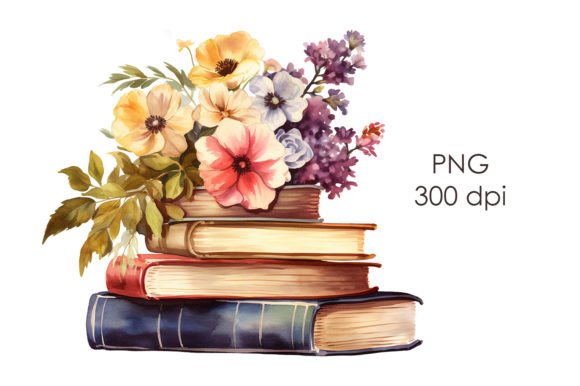
Watercolor Book Clipart: Illustrations for Digital Products
Evaluating the Asset for a New Shop Collection
As I prepare my shop for the upcoming seasonal refresh, I am constantly auditing new graphic design asset options to ensure they meet both aesthetic standards and commercial viability. My current focus is expanding a literacy and education-themed collection, which led me to evaluate this specific Watercolor Book Clipart pack. When sourcing illustrations for an online business, the first impression must go beyond personal preference; it requires a critical assessment of market fit, technical quality, and versatility across multiple revenue streams.
The immediate visual personality of this Watercolor Book Clipart leans toward a nostalgic, academic warmth. It does not feel overly cartoonish or juvenile, nor is it starkly modern. Instead, it occupies a sophisticated middle ground that appeals to teachers, librarians, homeschool parents, and cozy reading enthusiasts. The brushwork suggests a handmade quality, which is currently performing exceptionally well in the creative marketplace. For sellers targeting the "dark academia" or "cottagecore" niches, this style offers instant relevance. However, as a business-minded creator, I had to verify if this softness translates effectively into hard-selling products like merchandise and templates.
Commercial Applications Across Product Categories
A versatile digital product must justify its cost by serving multiple functions within a shop ecosystem. During my testing phase, I applied these book illustrations to three distinct product lines to gauge their adaptability.
- Printable Wall Art: This is the most natural fit. The watercolor texture retains its integrity when scaled up for 8x10 or 11x14 prints. I found that arranging the books in a stack formation with a simple serif quote created a high-perceived-value printable design suitable for home libraries and classrooms.
- Canva Template Kits: Social media managers and bloggers frequently seek cohesive visuals. I imported the PNG files into Canva to test layering capabilities. The transparent backgrounds were clean, allowing the books to serve as decorative anchors on Instagram carousel slides and Pinterest pins without obscuring text.
- Physical Merchandise: Testing for print-on-demand required checking color vibrancy. Watercolors can sometimes appear washed out on fabric. I ran test prints on both cotton t-shirts and ceramic mugs. The designs held up well on white substrates, maintaining the delicate pigment variation that defines the watercolor style.
For Cricut users and crafters, the utility depends heavily on file format. While the PNGs are excellent for sublimation and print-then-cut projects, I would caution against using complex watercolor textures for intricate vinyl cuts unless the seller provides simplified silhouette versions. The beauty of this asset lies in its painterly detail, which is often lost in standard SVG design conversions intended for adhesive vinyl.
Enhancing Listing Presentation and Click-Through Rates
In a saturated Etsy or Shopify environment, your thumbnail is your primary salesperson. Watercolor Book Clipart excels here because it adds organic texture to otherwise flat digital mockups. When designing listing images, I used individual book elements to frame product previews. This creates a visual hierarchy that guides the buyer’s eye toward the central offering while establishing a thematic context.
Furthermore, these illustrations support brand consistency. If you are building a small business branding identity around education or literature, using the same clipart family across your banner, logo accents, and product packaging creates a professional, curated look. Buyers trust shops that appear cohesive. I also utilized the assets to create bundle covers. A visually rich cover featuring multiple book elements signals value and variety, directly influencing conversion rates for design bundle listings.
Strategic Placement: Where the Asset Shines
Through practical application, it became clear where this Watercolor Book Clipart delivers the highest return on investment. It is exceptionally strong in:
- Digital Planners and Journals: As pre-cropped stickers for GoodNotes or Notability, the soft edges blend beautifully with digital paper backgrounds.
- Greeting Cards and Invitations: Perfect for "Back to School," teacher appreciation, or library event stationery. The tone is respectful yet celebratory.
- Blog and Content Graphics: Featured images for book reviews, educational articles, or literacy tips benefit from the non-distracting, elegant nature of the art.
- Seasonal Collections: These books pair effortlessly with autumn leaves, winter snowflakes, or spring florals, making them a year-round staple rather than a one-time use asset.
The asset works best when allowed to breathe. Large-scale applications where the texture is visible yield better customer satisfaction than tiny, compressed uses where the watercolor effect turns into visual noise.
Critical Limitations and Usage Warnings
No commercial design asset is perfect for every scenario. Identifying limitations before publishing prevents negative reviews and refund requests. Based on my evaluation, sellers should exercise caution in the following areas:
Low Contrast Backgrounds: Watercolor edges are inherently soft. Placing these light-toned books on dark backgrounds without a shadow or border can cause them to disappear. Always test visibility on the intended background color.
Tiny Sticker Details: For physical planner stickers under 1 inch, the fine details of the book spines and pages may blur during printing. Reserve the detailed versions for larger formats and use simplified outlines for miniature sticker sheets.
Text Overlap: Because watercolor is textured, placing small body text directly over the illustration reduces readability. Use these as marginalia or background elements, keeping the central text area clear or using a solid overlay box.
Cutting Machine Complexity: As mentioned, avoid selling these as intricate cut files for vinyl. If your target audience is primarily Cricut users, you must provide a separate, solid-color trace version alongside the original PNG design.
Seller Checklist for Quality Assurance
Before adding Watercolor Book Clipart to your shop, run through this practical validation list to ensure a professional customer experience:
- Verify Resolution: Confirm all files are at least 300 DPI at the maximum intended print size. Upscaling watercolor often results in pixelation that ruins the handmade aesthetic.
- Check Transparency: Zoom in at 100% to inspect the edges of the PNGs. Look for white halos or jagged artifacts that indicate poor background removal. Clean edges are non-negotiable for sublimation design and digital overlays.
- Test Font Pairings: Experiment with various typography styles. Serif fonts enhance the classic book vibe, while handwritten scripts add a personal journal feel. Ensure the clipart doesn't clash with your chosen typeface.
- Confirm Licensing: Re-read the commercial license terms. Verify if you can use the asset in end products for sale versus just for personal use. Document any attribution requirements to avoid future legal issues.
- Mockup Validation: Never rely solely on the raw file for your listing. Create realistic product mockup images showing the clipart on a mug, shirt, or printed page. Customers need to visualize the final result to understand the scale and texture.
- File Organization: Group files logically. Separate high-res print files from web-resolution versions. Clear naming conventions reduce customer support inquiries regarding file selection.
Final Verdict for Digital Entrepreneurs
Watercolor Book Clipart represents a solid investment for sellers in the education, stationery, and lifestyle niches. Its strength lies in its emotional resonance and textural richness, which elevates standard digital downloads into premium-feeling products. By understanding its ideal applications in wall art and templates, while respecting its limitations in vinyl cutting and low-contrast environments, you can integrate this asset into a profitable, professional product line. Always prioritize technical quality checks and realistic mockups to bridge the gap between a beautiful illustration and a successful Etsy product.